
Ann-Sophie Bosshard
The project investigates how representations of mobility on the early modern stage forged affective and cognitive communities, and how such communities responded to mobile people, objects, and ideas in ethical terms. The project focuses on playtexts that stage phenomena like travel and migration, displacement and emplacement, infrastructures, and networks. Several overarching research questions guide the reading of these texts:
- What challenges and opportunities are negotiated in the plays when communities encounter mobile agents or become mobile themselves?
- How do the plays affectively and cognitively address their audiences and what ethical, communal responses do they invoke?
- How do these considerations shape our critical understanding of such affective and cognitive communities in an age of mobility?
As the plays stage how communities in playworlds respond to mobility in ethical terms, they offer affective and cognitive models for the audiences’ own responses in the playhouse and beyond. By exploring such communal responses to social changes resulting from mobility, the project addresses concerns that were as pertinent in the early modern period as they are today.
Screencap of Jacob Savery the Elder (and/or Studio). Fair on St Sebastian’s Day. 1598. Mauritshuis, The Hague.
https://www.mauritshuis.nl/en/our-collection/artworks/156-fair-on-st-sebastian-s-day
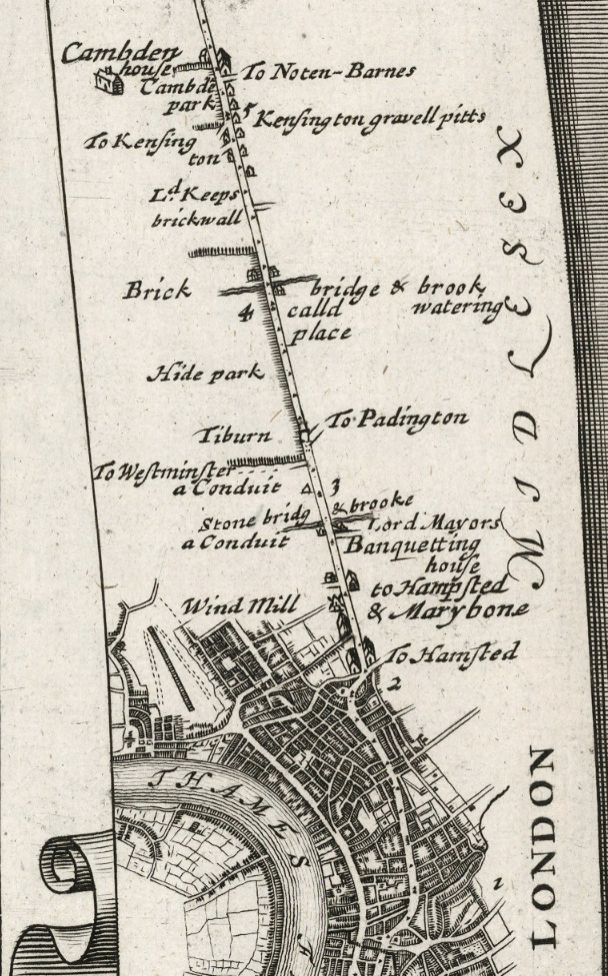
Screencap of John Ogilby, Road from London to Aberistwith. Plate I. London to Islip and Oxford. London 1675. David Rumsey Map Collection 9735.028.