
Timothy Holden
The project investigates embodied sensation in Shakespeare’s plays and playhouses by drawing on the neurobiological concepts of “proprioception” – denoting the perception of the body in space – and “kinaesthesia” – denoting the perception of bodily movement. The project asks how plays, actors, and audiences “made sense” in and of performances in the material environment of early modern playhouses:
- How were playgoers prompted to perceive, move through, and understand these spaces of shared bodily presence, co-spectatorship, and social emplacement?
- And how did plays negotiate processes of embodied perception through which characters, actors, and spectators experience physical emplacement and motion?
To approach these questions, the project explores moments of sensory crisis and of sensory resilience in Shakespeare’s plays, as well as their resonance in the playhouses and beyond. Drawing on concepts from New Materialism, sensory studies, cognition studies, disability studies, historical phenomenology, and neurophysiology, the project aims to offer a wide, interdisciplinary framework for understanding embodied sensations in early modern playhouses.
Hendrick Avercamp. Ice Scene. 1610. Mauritshuis, The Hague.
https://www.mauritshuis.nl/en/our-collection/artworks/785-ice-scene#detail-data
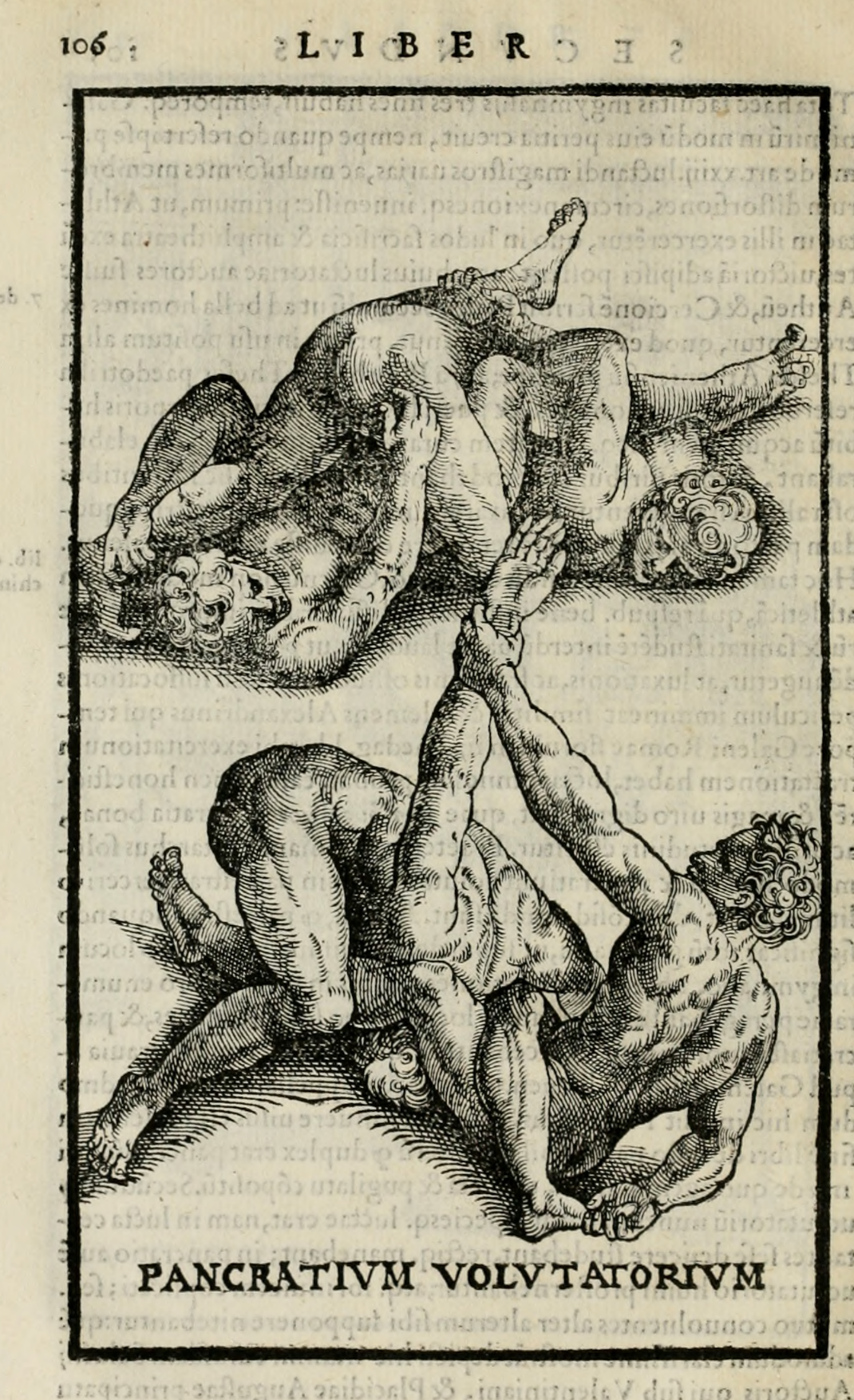
Woodcut from Girolamo Mercuriale, De arte gymnastica, libri sex. Venice, 1569. Page 101.