
Lukas Arnold
This project investigates the period’s collective notions of justice through the lens of four of its most pressing environmental problems: dearth, deforestation, enclosure, and natural catastrophes. In doing so, my study combines new developments in affect and ecological theory to explore the interactions between community, environment, and discourses of law and justice. The following questions are at the core of my research:
- What were the interactions between early modern communities, their collective ideas about justice, and the environment they inhabited?
- How and in what forms did literary works influence, shape, and enable the period’s environmental justice sensibilities?
Literature, I contend, played a vital role in shaping the period’s notions of environmental justice. Plays and poems raised ethical questions about resource depletion, the degradation of the natural world and the discrepancies in how environmental ills are socially distributed. Moreover, through their emotional affordances, literary works facilitated their spectators and readers to engage with these issues not just through their individual experience but as part of an affective community.
Jan Brueghel the Elder. A Wooded Landscape with Travelers on a Path. 1607. Oil on Wood, 46 x 83.2cm. The Metropolitan Museum, New York.
https://www.metmuseum.org/art/collection/search/435810. Object Number 1974.293.
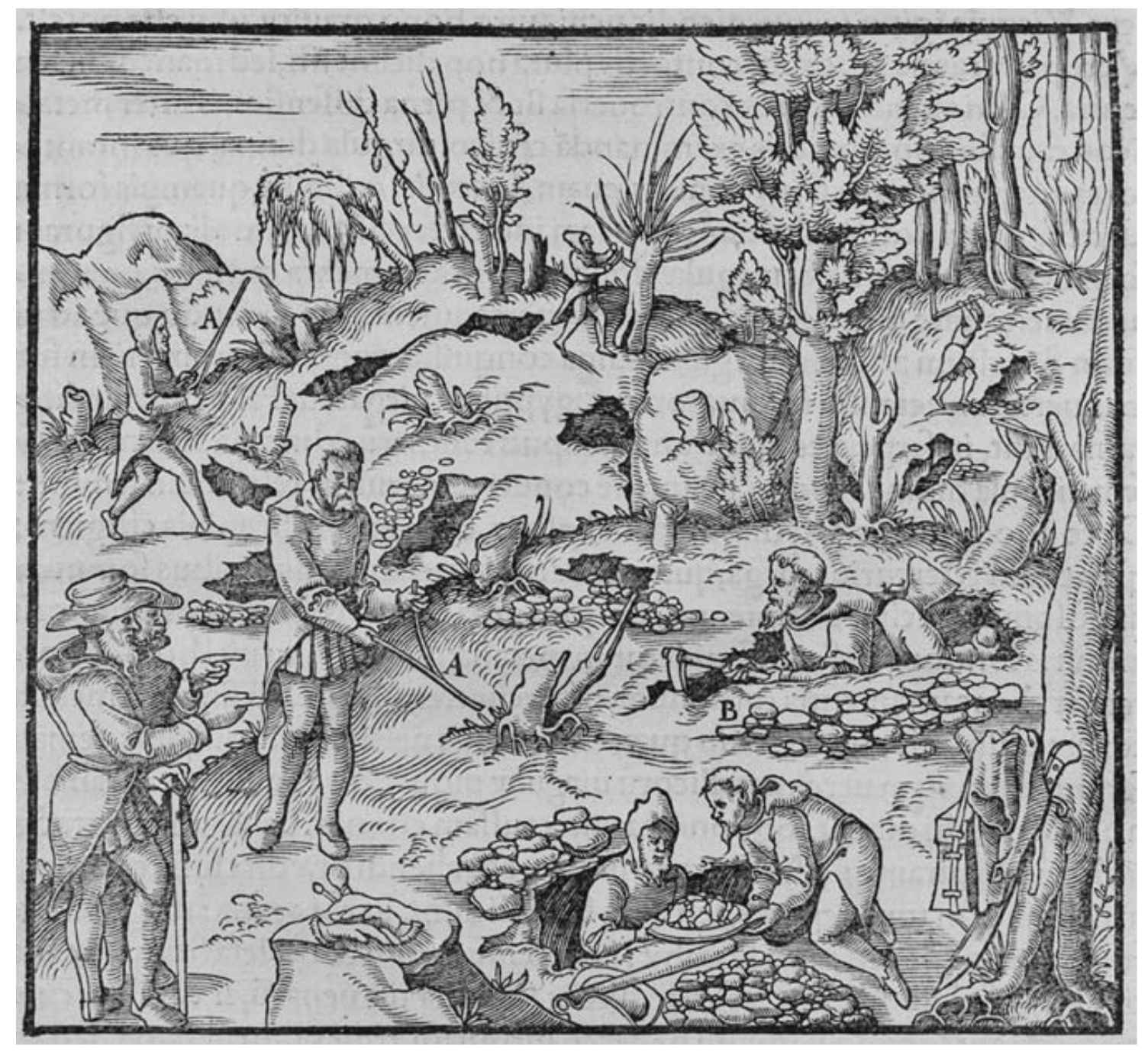
Woodcut from Georgius Agricola, De Re Metallica. Basel, 1556. Page 40. Translated by Herbert Clark Hoover and Lou Henry Hoover. Salisbury House, London. 1912.