
Jifeng Huang
This dissertation is premised on a fundamental dialectic of the human body: while it is the corporeal site where ideas about being human converge and contend with each other, it is also the medium through which experiences are perceived and mediated. Focusing on the theatre as a key arena of epistemic investment, the project aims to recover how representations of disabled bodies and their crip perspectives participated in early modern epistemology. At the core of the research project are two questions:
- How did the early modern theatre represent ability and disability?
- How do disabled figures on the early modern stage respond to the facts and effects of their disabilities?
The project explores these questions with consideration of early modern scientific development, medical breakthroughs, new advancements of empiricism, and geographical discoveries. As such, it asks how subjectivity is shaped by/with disabled bodies, investigating how particular social conceptions and material conditions of disability give shape to disabled characters’ subjectivities in early modern drama, as well as the ways in which these characters remap their physical and social environments.
Pieter Bruegel the Elder. The Beggars / The Cripples. 1568. Louvre, Paris.
https://commons.wikimedia.org/wiki/File:Pieter_bruegel_il_vecchio,_gli_storpi,_1568.JPG

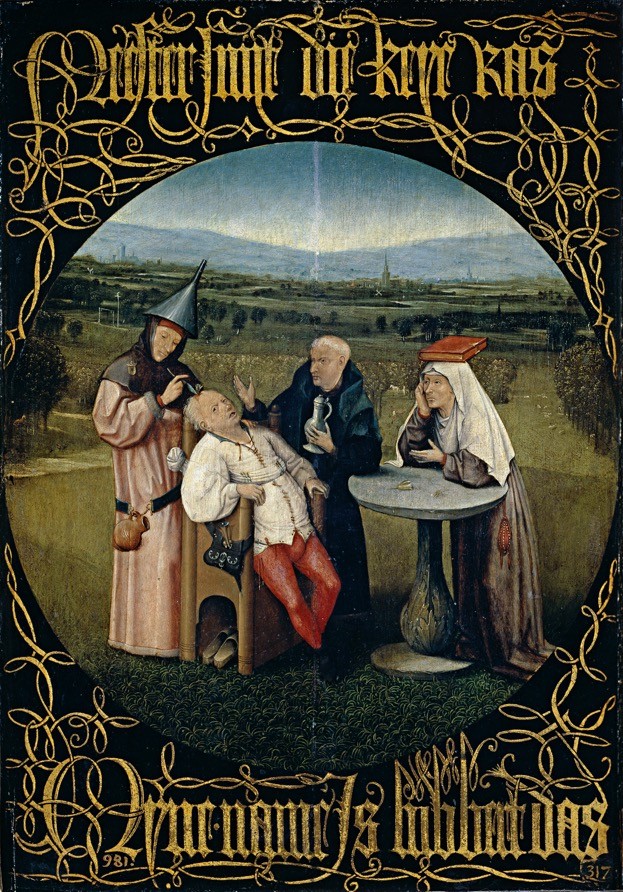
Hieronymus Bosch. The Extraction of the Stone of Madness. C. 1494-1516. Museo del Prado, Madrid.
https://commons.wikimedia.org/wiki/File:Extraction_of_the_Stone_Hieronymus_Bosch.jpg
